- Electrical Passive Components Products
- sku: 2760463179671632
- ACTION Q436-0000
Q436-0000 ACTION INSTRUMENTS Potentiometer Signal Conditioner
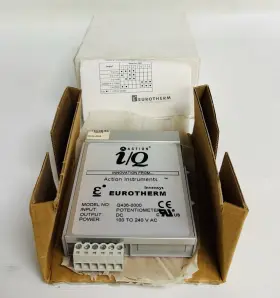
| Brand | ACTION INSTRUMENTS |
|---|---|
| Manufacturer Part Number | Q436-0000 |
| Type | POTENTIOMETER INPUT SIGNAL CONDITIONER |
| Country/region Of Manufacture | CANADA |
Review ACTION INSTRUMENTS Potentiometer Input Signal Conditioner
The Q436-0000 Potentiometer Signal Conditioner is a versatile and high-performance instrumentation accessory designed to convert the variable resistance signal from a potentiometer into a standard 0-5V or 4-20mA output signal. This conditioner is ideal for use in a wide range of industrial automation, process control, and laboratory applications where accurate and reliable measurement of potentiometer signals is crucial.
The Q436-0000 features a high-precision, linear 3:1 voltage divider that provides a stable output voltage proportional to the input potentiometer resistance. The input impedance is very high, ensuring minimal load effect on the potentiometer, allowing it to function optimally. The conditioner also includes a built-in temperature compensation circuit that ensures output stability over a wide temperature range, making it suitable for use in demanding environments.
The output of the Q436-0000 can be configured as either a 0-5V DC voltage signal or a 4-20mA current signal, depending on the specific measurement requirements of the application. The voltage output is accurate to within 0.25% of full scale, while the current output has a 0.5% accuracy. The conditioner is housed in a rugged, anodized aluminum enclosure with a compact size of only 4.1 x 3.1 x 1.3 inches, making it easy to install and integrate into various control systems.
The Q436-0000 Potentiometer Signal Conditioner is designed with a high level of electrical isolation, ensuring safety and compatibility with a wide range of measurement systems. It features an input isolation voltage of 1500V RMS and an output isolation voltage of 500V RMS, making it suitable for use in applications with potentially hazardous input voltages.
The conditioner also includes a number of user-friendly features, such as a front-panel potentiometer trimmer that allows for fine-tuning of the output signal, an LED indicator that displays the output status, and a grounding terminal that ensures proper ground connection. The Q436-0000 is backed by a comprehensive 2-year warranty and is RoHS compliant, ensuring peace of mind and sustainability.
In summary, the Q436-0000 Potentiometer Signal Conditioner is a robust, high-precision instrumentation accessory designed to convert potentiometer signals into standard voltage or current outputs. Its versatile features, high accuracy, and rugged design make it an essential component for a wide range of industrial and laboratory applications where precise measurement is critical.
A potentiometer signal conditioner, also known as a voltage divider or potentiometer buffer, is an electronic component used to adjust or condition signals from potentiometers. Here are some pros and cons of buying a potentiometer signal conditioner (Q436-0000 or any equivalent):
Pros:1. Improved Signal Accuracy: A potentiometer signal conditioner can improve the accuracy of the signal readings from a potentiometer by reducing the effects of load variations and temperature drift.
2. Isolation: It can provide electrical isolation between the sensor (potentiometer) and the measurement circuit, reducing the risk of electrical interference and noise.
3. Protection: It can protect the measurement circuit from overvoltage or undervoltage conditions that may occur due to variations in the potentiometer's resistance.
4. Simplification: It can simplify the wiring and circuit design by combining the functions of the potentiometer and signal conditioning into a single component.
5. Adjustability: Some models offer adjustable gain and offset, making it easier to fine-tune the signal for specific applications.
Cons:1. Cost: A potentiometer signal conditioner may add to the overall cost of the project or system, especially if multiple channels are required.
2. Complexity: It may add to the complexity of the circuit design and assembly, requiring additional components and soldering.
3. Size: Some models may be larger than the potentiometer itself, adding to the overall size and weight of the system.
4. Calibration: It may require periodic calibration to ensure accurate readings, which can be time-consuming and require specialized equipment.
5. Limited Range: Some models may have a limited input signal range, which may not be suitable for all applications.
Conclusion:A potentiometer signal conditioner can offer numerous benefits, including improved signal accuracy, isolation, protection, simplification, and adjustability. However, it may also add to the cost, complexity, size, and calibration requirements of the system. Ultimately, the decision to use a potentiometer signal conditioner depends on the specific application requirements and the trade-offs that are acceptable. If the benefits outweigh the drawbacks and the application requires high accuracy, isolation, or protection, then a potentiometer signal conditioner is a worthwhile investment. If the application is simple and the signal accuracy is not critical, then a plain potentiometer may be sufficient.
Details:
Location: f1s18. Please look at the pictures, 30 day warranty. Up for sale is a brand new / unused old stock - Action instruments Q436-0000 potentiometer input signal conditioner.
specifications passivecompos:
- brand: Action Instruments
- mpn: Q436-0000
- type: Potentiometer Input Signal Conditioner
- country/region of manufacture: Canada
general passivecompos:
- category: Business & Industrial > Passive Components > Variable Resistors > Potentiometers
offer passivecompos:
- best offers: true
- started: july 1, 2025
- in stock #: 2
- prices: $300.00–$500.00
- item condition: New – Open box
- sold #: 19
- availability: in stock
- options: ship-to-home
returns passivecompos:
- method: money back
- paid by: buyer
- time: 30 days
- policy: returns accepted
seller passivecompos:
- # reviews: 864
- city: apopka, florida
- rating: 97.9%
shipping passivecompos:
- transit: 4-9 days
- carrier: usps
- service: usps priority mail, usps ground advantage
- class: expedited, standard
- type: calculated
payments passivecompos:
- other
- credit card: visa
- wallet: paypal